AI Phone Screening Tool: Why Voice Automation Beats Manual Calls
AI phone screening tools reduce hiring time by 75% and cost by 80%. See why voice automation is replacing manual calls and what it means for recruiters.
HiringPartner Team
· 6 min read
The traditional phone screen is dying. While HR teams struggle with 44-day hiring timelines and miss 60-80% of incoming calls, 67% of recruiters already use AI to handle what used to be their most time-consuming task.
But here's what most people get wrong about AI phone screening: it's not about replacing human recruiters. It's about eliminating the parts of recruiting that make good recruiters want to quit.
The Hidden Cost of Manual Phone Screening
Let's talk numbers. AI phone screening compresses the traditional talent shortlisting process by 75% and saves companies up to 80% on each hire. But the real cost isn't just money.
Manual phone screening creates a bottleneck that breaks the entire hiring process. When recruiters spend hours calling candidates who don't answer, leaving voicemails that don't get returned, and playing phone tag to schedule 15-minute conversations, the best candidates move on to faster competitors.
Teams report 20-40% lower cost-per-hire when AI automates screening and scheduling. More importantly, one staffing agency using voice AI saw interview completion rates double compared to manual outreach.
How AI Phone Screening Actually Works
At HiringPartner.ai, we've built phone screening that works differently than most "AI" tools on the market. Instead of rigid chatbots reading scripts, our system conducts natural conversations that adapt in real-time.
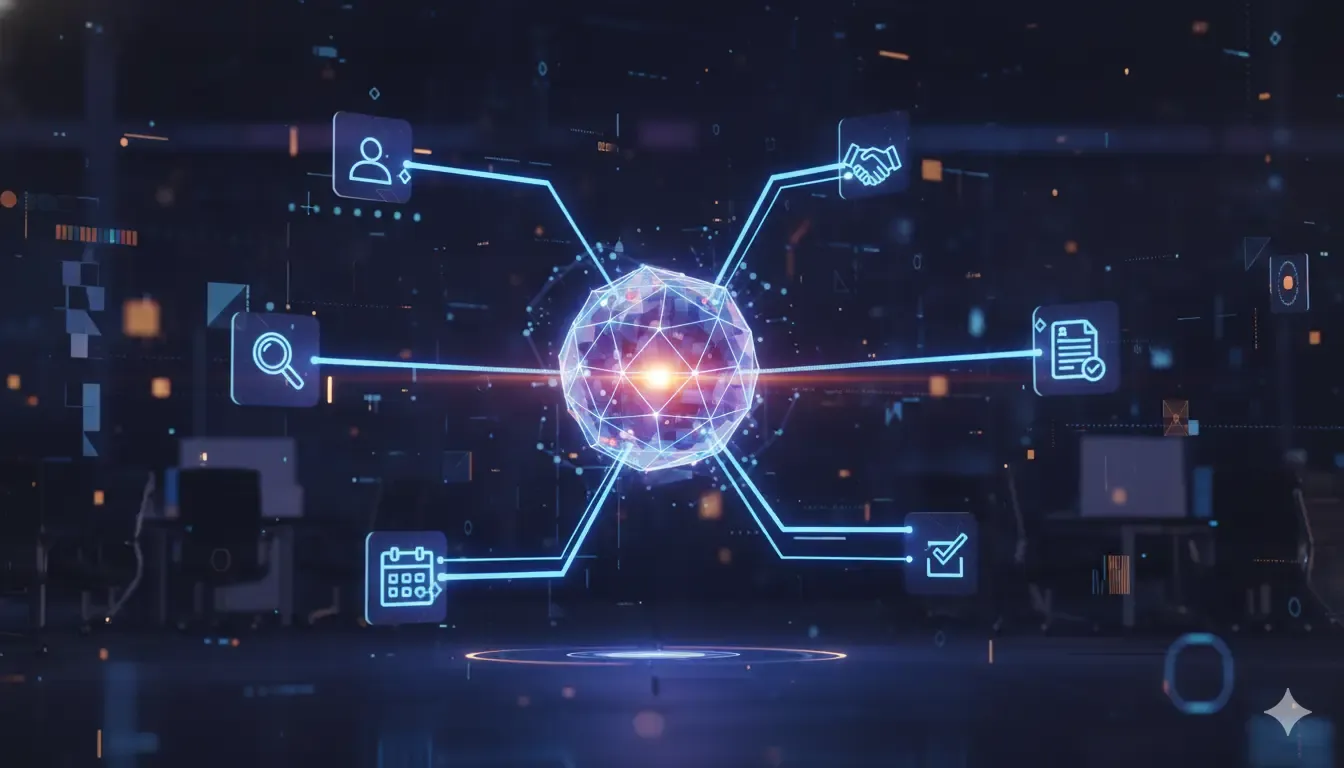
Here's what happens behind the scenes:
- Dynamic questioning: The AI generates role-specific questions based on the job requirements and candidate's background
- Real-time evaluation: Responses are evaluated in real-time with structured feedback reports
- Intelligent follow-up: If a call is missed, the system instantly switches to WhatsApp to re-engage
- Instant scheduling: Qualified candidates get interview slots booked automatically
The technology has improved dramatically. Speech recognition error rates dropped from 25% in 2015 to under 5% in 2024, and modern conversational AI achieves 85-95% accuracy for routine business inquiries.
Why Traditional Phone Screens Fail
Most HR leaders accept phone screen failure as inevitable, but the data tells a different story. Candidate response times can fall from 7 days to under 24 hours when you remove human bottlenecks.
The problem isn't candidates. It's process design:
- Timing mismatches: 35-40% of business calls come outside standard hours
- Inconsistent execution: Manual screening varies by recruiter mood, experience, and workload
- No immediate feedback: Candidates wait days or weeks to hear back
- Scheduling overhead: Back-and-forth emails extend the process unnecessarily
AI phone screening solves all of these problems by working 24/7, asking consistent questions, and providing immediate next steps.
The Scalability Breakthrough
Here's where AI phone screening becomes transformative: it scales without degrading quality. Voice-based AI can handle thousands of candidate interviews per day, something impossible with human-only processes.
We see this in high-volume hiring scenarios. An e-commerce business used voice AI to handle thousands of applications during peak season within a single week, processing applications, conducting interviews, and delivering top candidate lists within days.
For healthcare recruiting, AI can verify certifications, licenses, and availability for night shifts. For technical roles, it assesses experience with different coding languages. The system adapts to industry-specific requirements automatically.
Common Objections (And Why They're Wrong)
Every conversation about AI phone screening includes the same concerns. Let's address them:
"Candidates will hate talking to a robot."
The data disagrees. 64% of job seekers are comfortable with AI conducting initial screening interviews, and 58% prefer immediate AI responses over delayed human replies. When candidates get stuck in weeks-long hiring processes, they prefer fast AI interaction over slow human response.
"AI can't assess soft skills."
This assumes human phone screens are good at assessing soft skills, which research contradicts. Candidates who underwent AI-led interviews succeeded in subsequent human interviews at 53.12% compared to traditional resume screening. AI screens for basic qualifications and communication ability. Human interviews focus on culture fit and complex judgment calls.
"It's too impersonal."
Automated screenings share information about the role and company, address concerns, and provide immediate answers to frequently asked questions. Many candidates find this more helpful than brief, rushed human calls.
Integration with Human Judgment
The best AI phone screening tools don't eliminate human recruiters. They amplify their impact. Recruiters can conduct thousands of phone screenings in a fraction of manual time, allowing them to focus on more impactful tasks.
At HiringPartner.ai, qualified candidates from AI screening move directly to human interviews. Unqualified candidates get respectful rejection messages with feedback. The humans handle relationship-building and final decisions while AI handles the repetitive qualification work.
AI automation enables companies to reduce agent headcount by 40-50% while handling 20-30% more calls. But this isn't about firing recruiters. It's about letting them focus on the work that actually requires human intelligence.
Implementation Best Practices
Successful AI phone screening requires more than just buying software. Here's what works:
- Start with high-volume roles: Test on positions where you screen dozens of candidates monthly
- Create detailed question banks: AI creates role-specific questions and asks follow-ups based on responses
- Set clear qualification criteria: Define what moves candidates forward vs. screens them out
- Monitor for bias: Use consistent evaluation criteria across all candidates
- Maintain human touchpoints: AI screens, humans decide
The technology works, but implementation matters. Companies that treat AI as magic often fail. Companies that treat it as a powerful tool for systematic screening succeed.
The Future of Phone Screening
Industry forecasts predict 70% of companies will have AI tools in their hiring workflow by end of 2025. Early adopters gain competitive advantage through faster, more consistent screening processes.
But the real opportunity isn't just efficiency. It's enabling human recruiters to focus on relationship-building, strategic thinking, and complex decision-making instead of repetitive qualification calls.
We built HiringPartner.ai's phone screening because we believe great recruiting requires both AI efficiency and human judgment. The best hiring processes use AI to handle the systematic work that machines do better, freeing humans to focus on the relationship work that only humans can do.
Try our free tier to see how AI phone screening can transform your hiring process. No credit card required, and you'll see results in your first week.